
Fleeting Landscapes
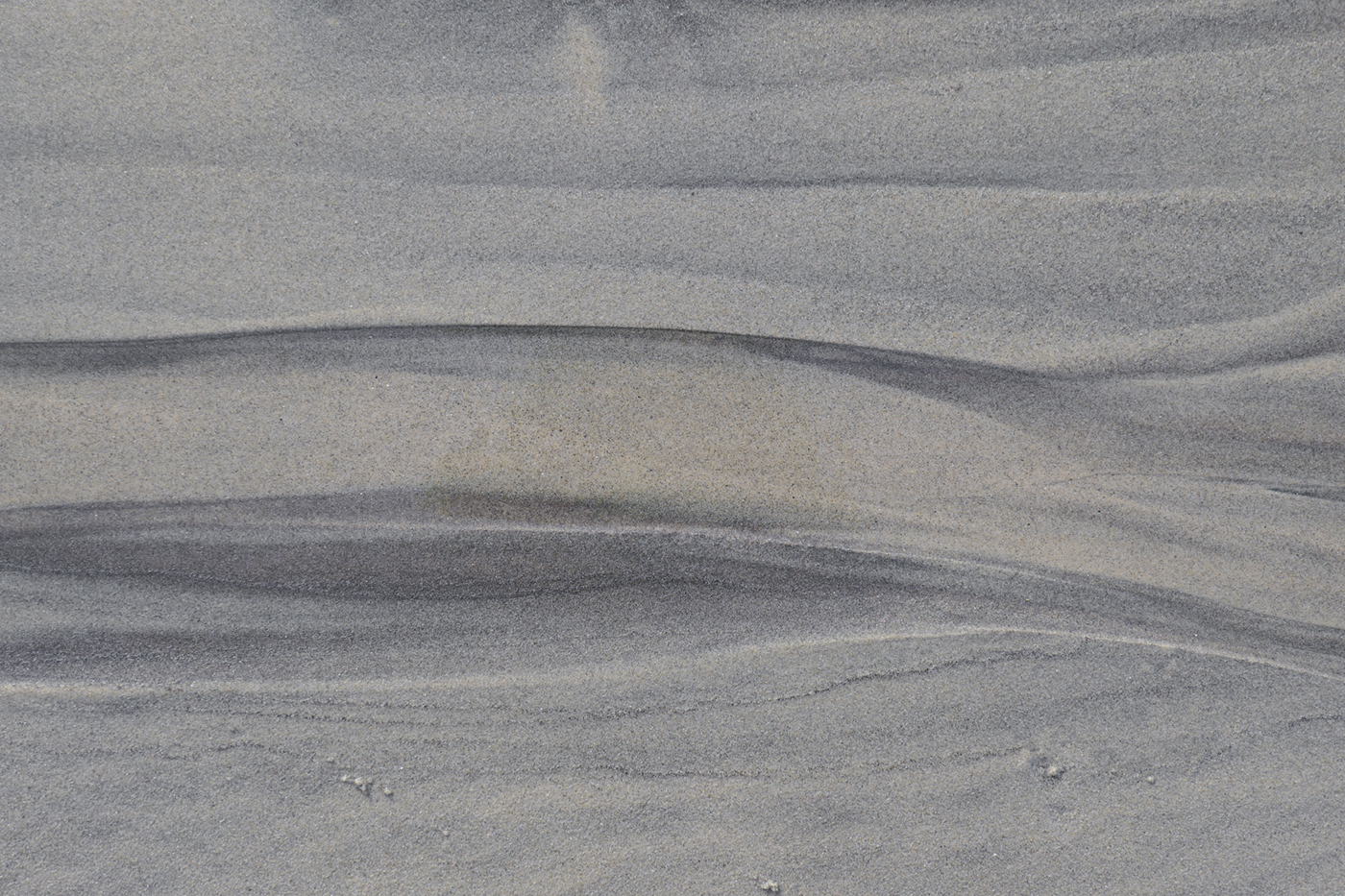
Klaudia Dietewich „Fleeting Landscapes, Plage des Blancs Sablons,
Le Conquet, Bretagne, FR, 2020 – 2023 (1)“
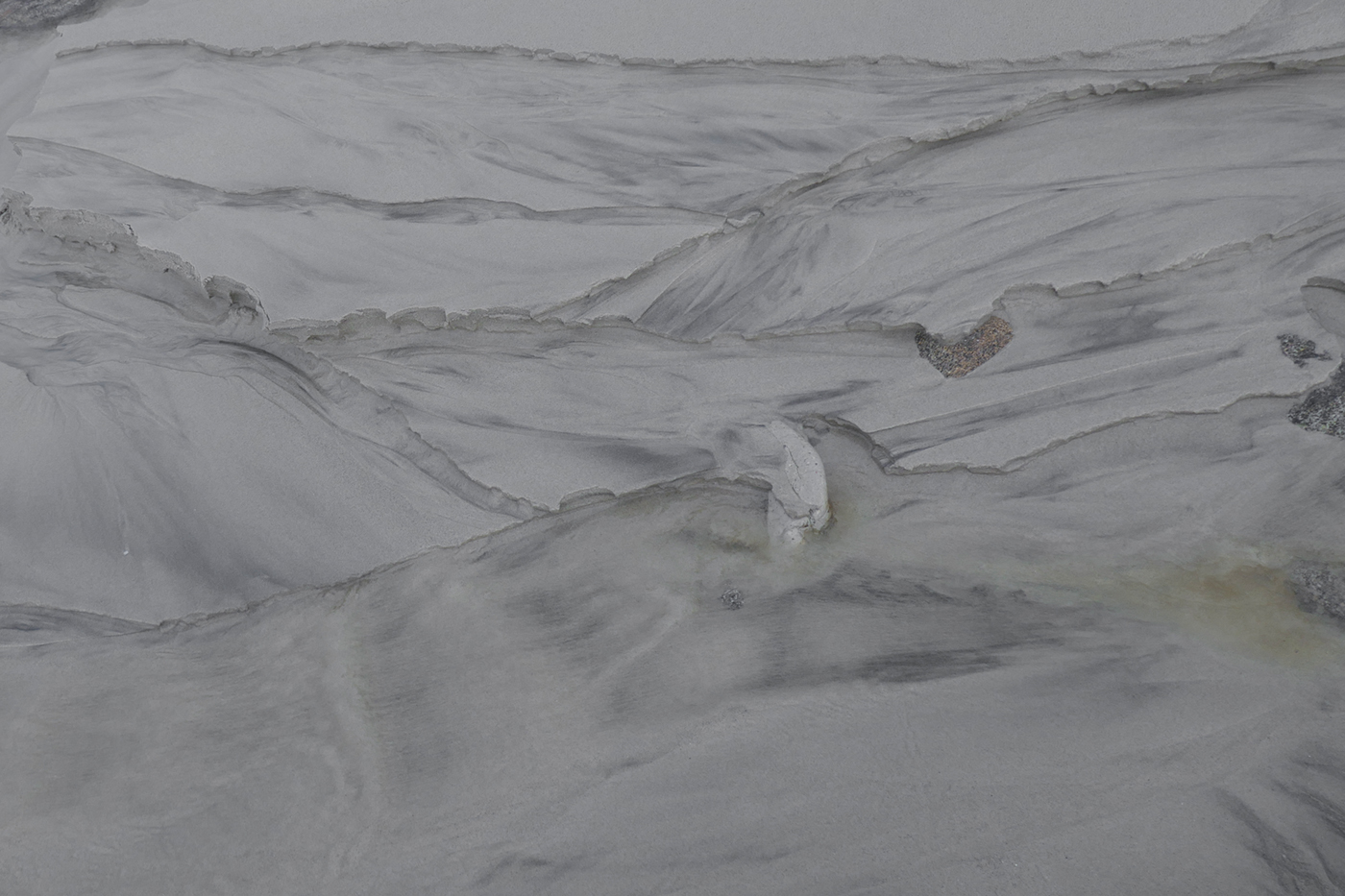
Klaudia Dietewich „Fleeting Landscapes, Plage des Blancs Sablons,
Le Conquet, Bretagne, FR, 2020 – 2023 (3)“
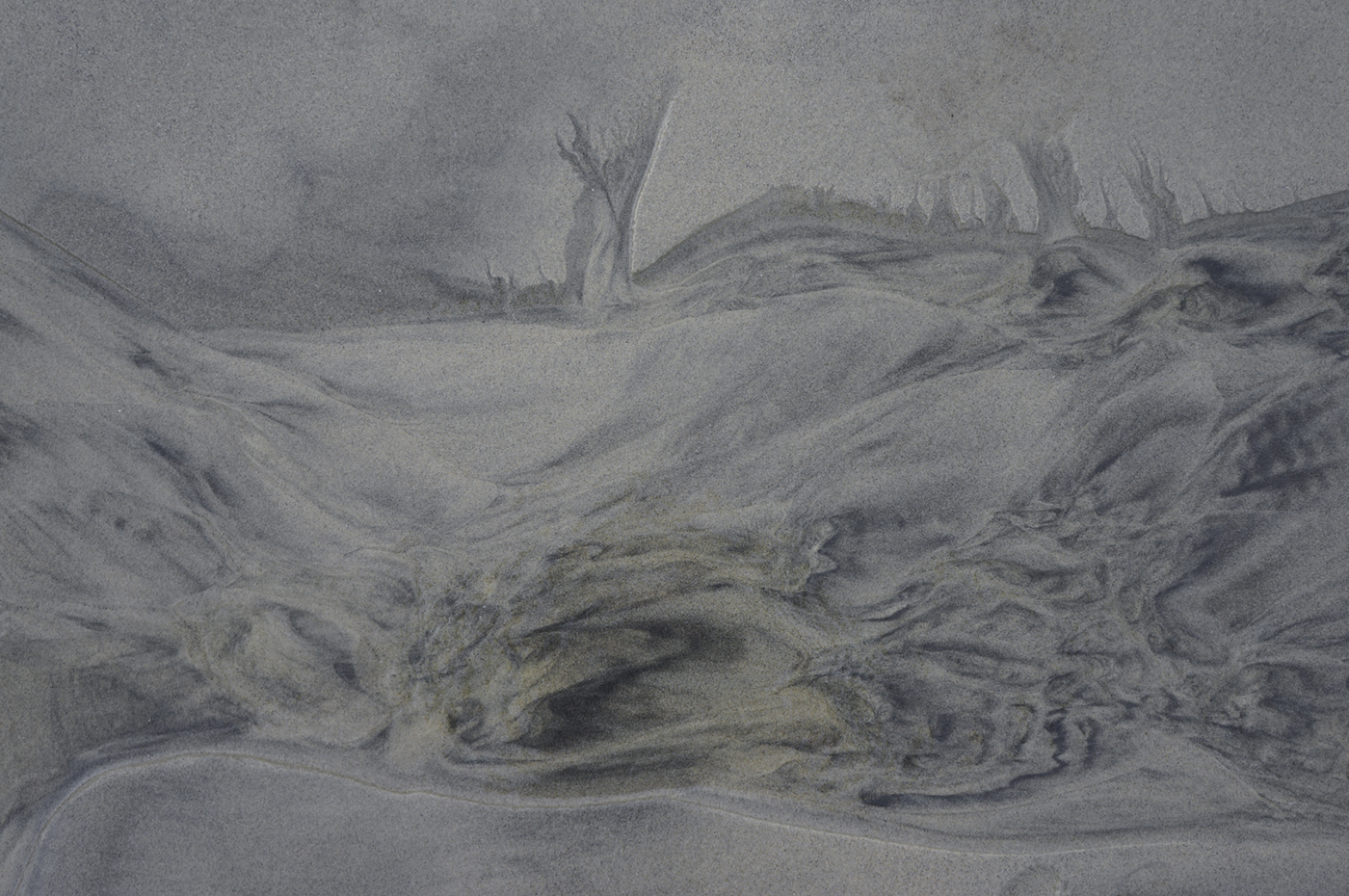
Klaudia Dietewich „Fleeting Landscapes, Plage des Blancs Sablons,
Le Conquet, Bretagne, FR, 2020 – 2023 (2)“
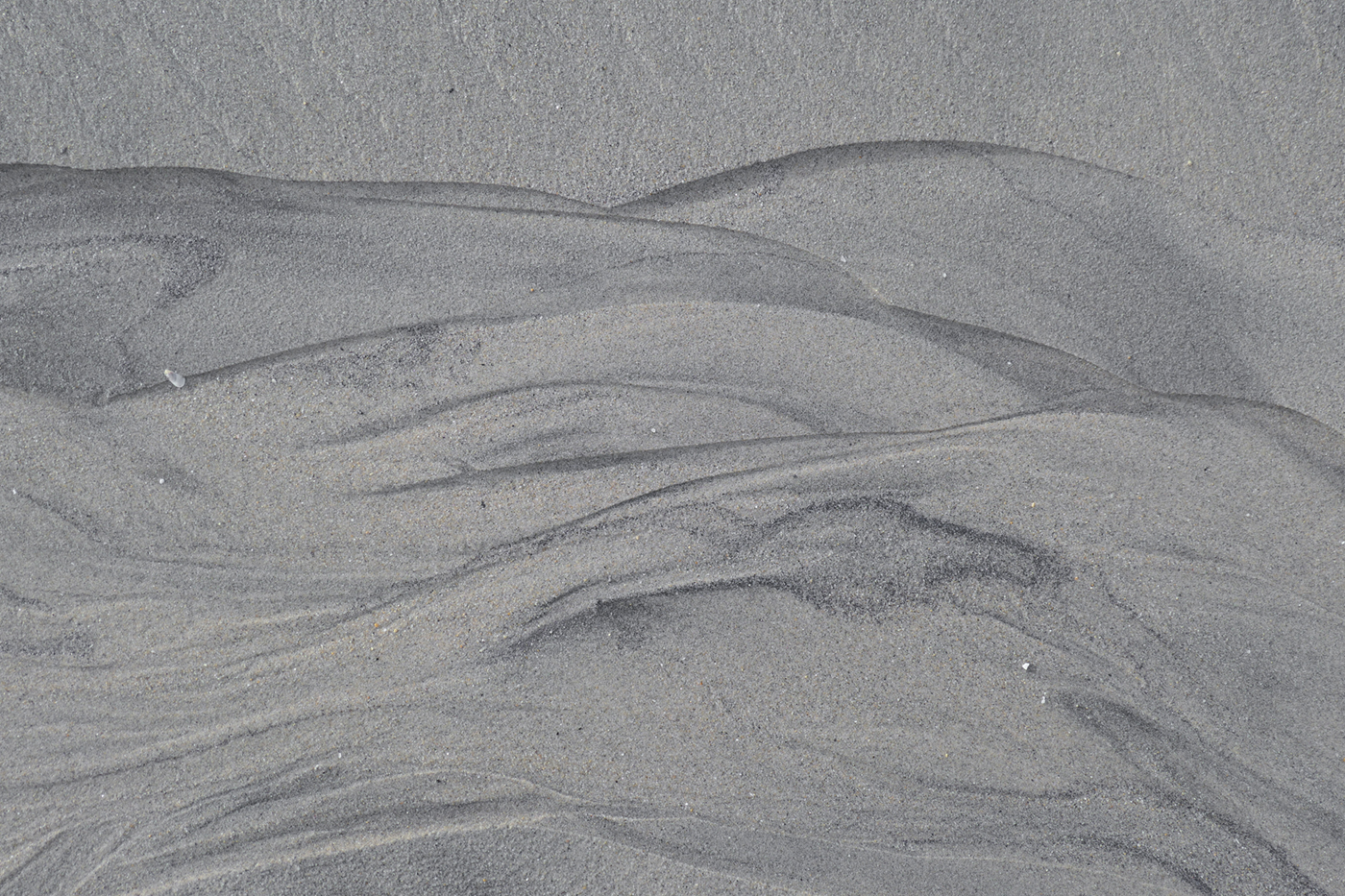
Klaudia Dietewich „Fleeting Landscapes, Plage des Blancs Sablons,
Le Conquet, Bretagne, FR, 2020 – 2023 (4)“
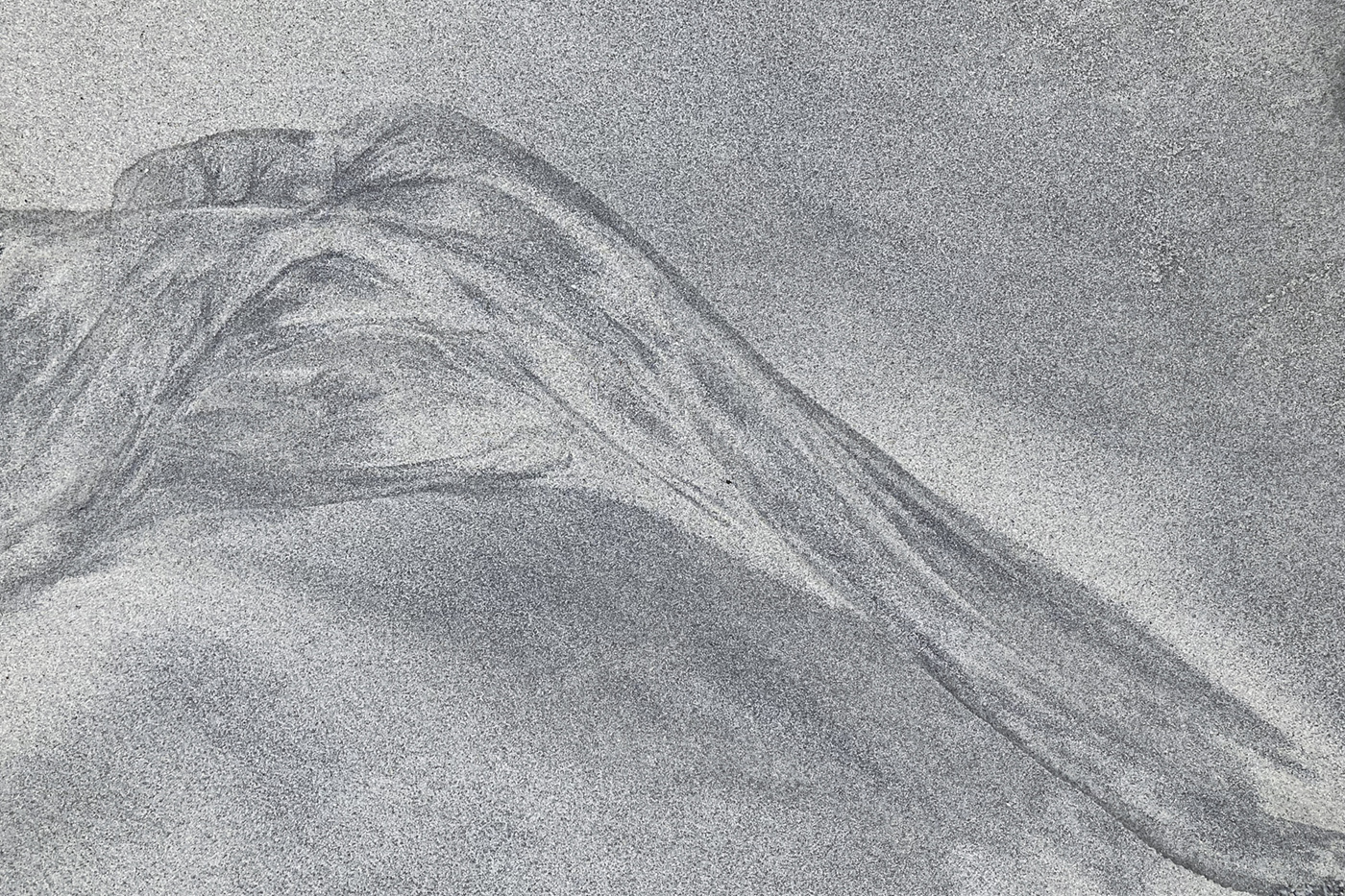
Klaudia Dietewich „Fleeting Landscapes, Plage des Blancs Sablons,
Le Conquet, Bretagne, FR, 2020 – 2023 (5)““
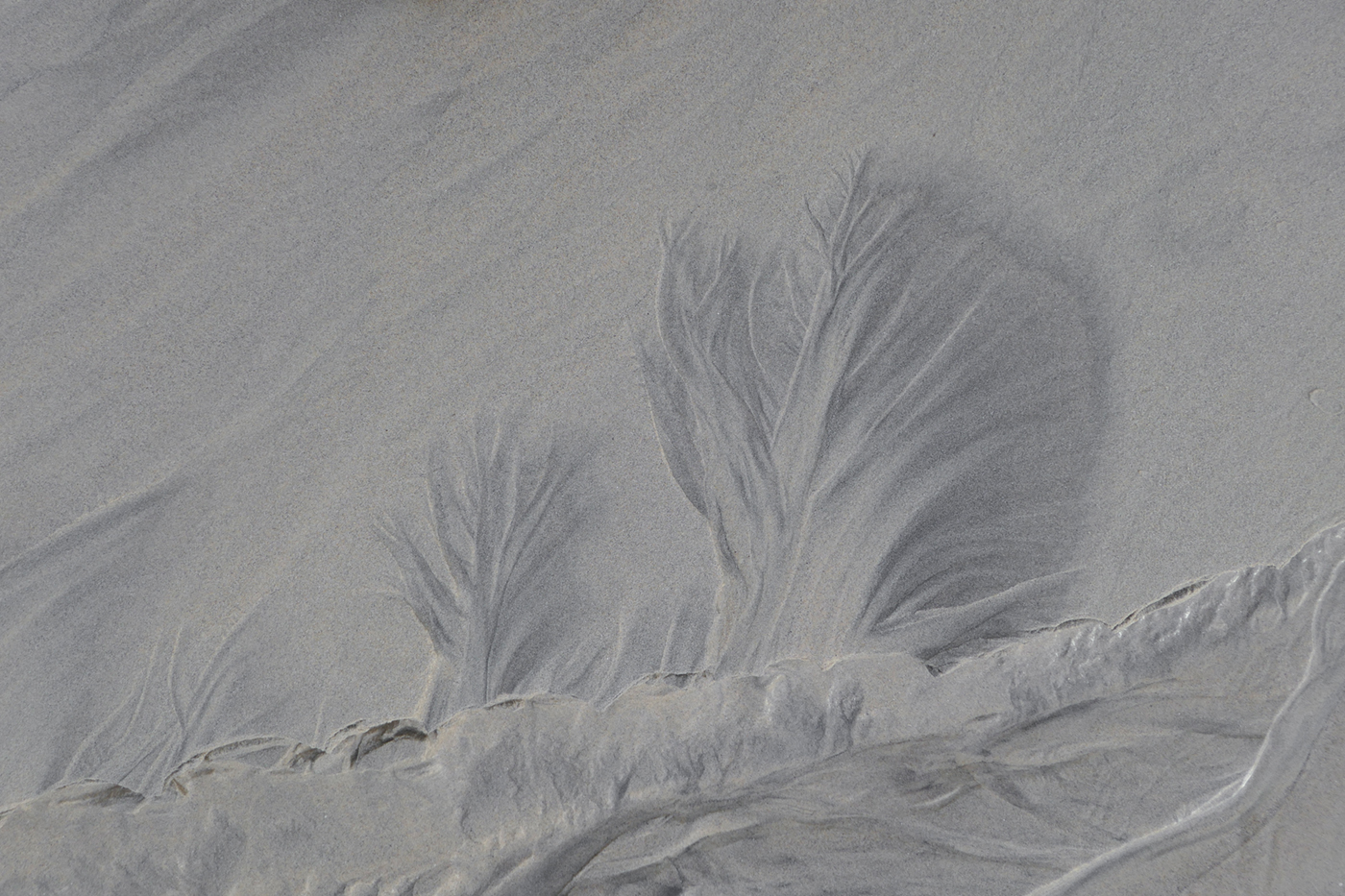
Klaudia Dietewich „Fleeting Landscapes, Plage des Blancs Sablons,
Le Conquet, Bretagne, FR, 2020 – 2023 (7)“
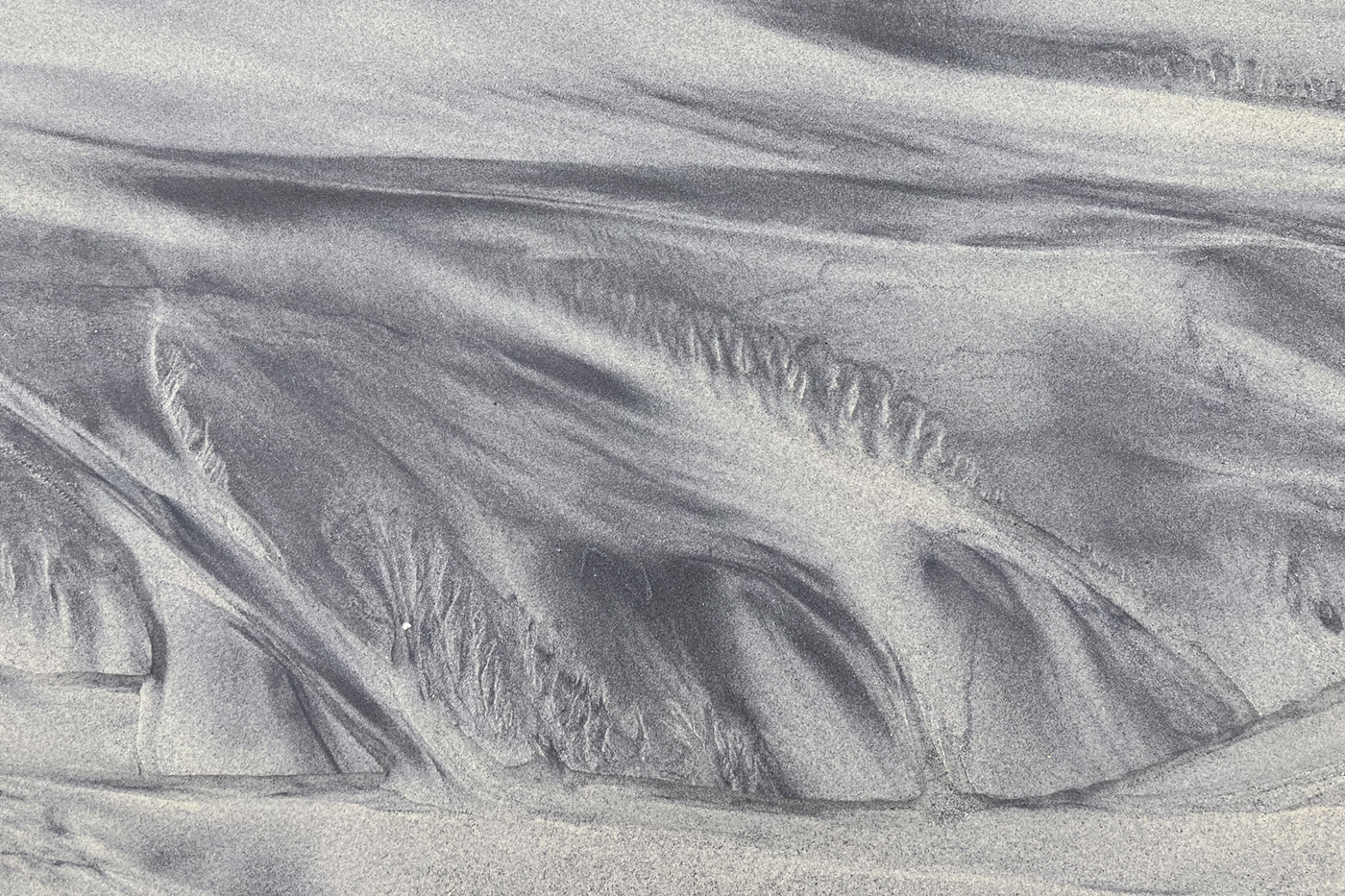
Klaudia Dietewich „Fleeting Landscapes, Plage des Blancs Sablons,
Le Conquet, Bretagne, FR, 2020 – 2023 (6)“
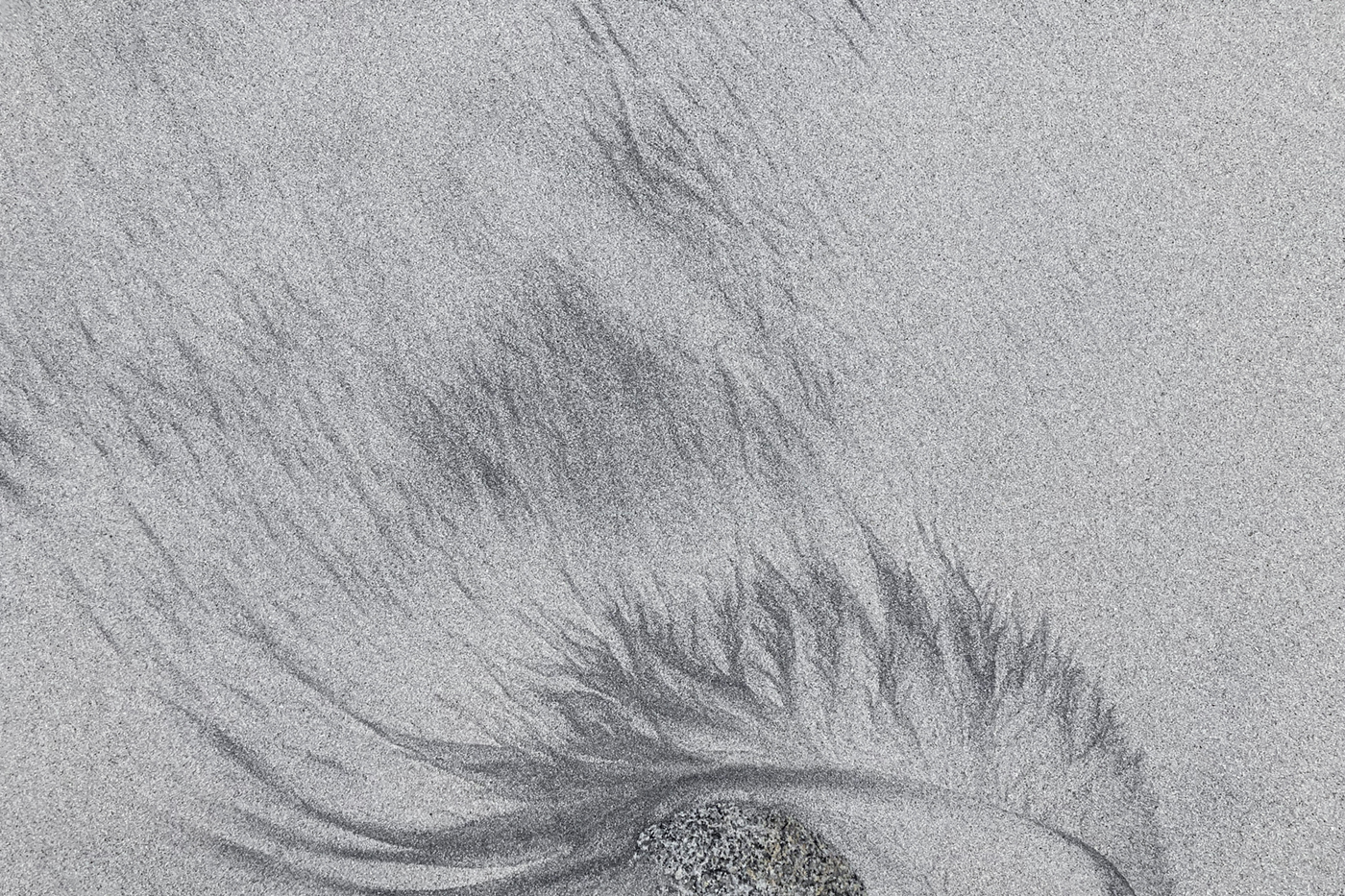
Klaudia Dietewich „Fleeting Landscapes, Plage des Blancs Sablons,
Le Conquet, Bretagne, FR, 2020 – 2023 (8)““
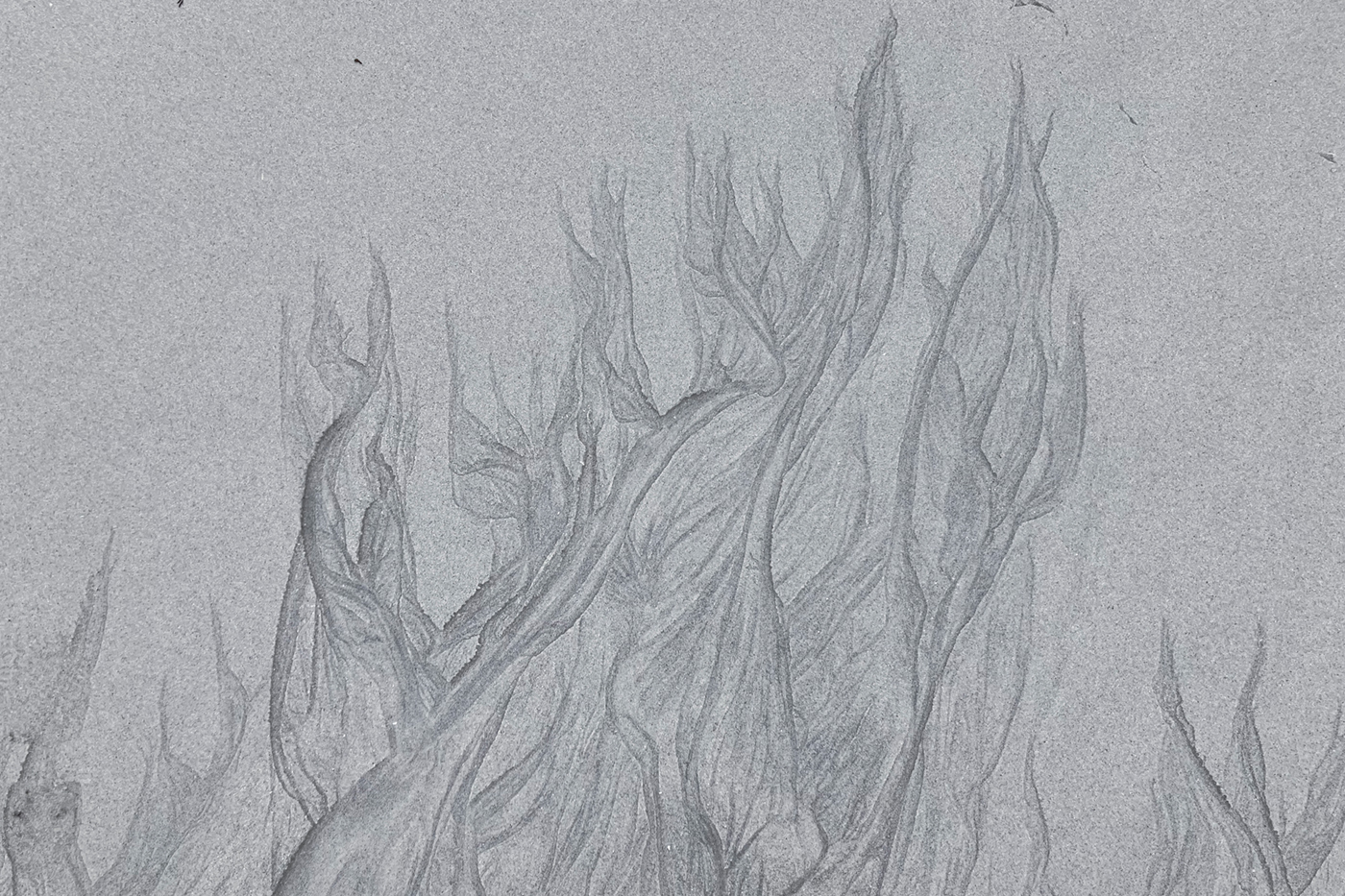
Klaudia Dietewich „Fleeting Landscapes, Plage des Blancs Sablons,
Le Conquet, Bretagne, FR, 2020 – 2023 (9)“
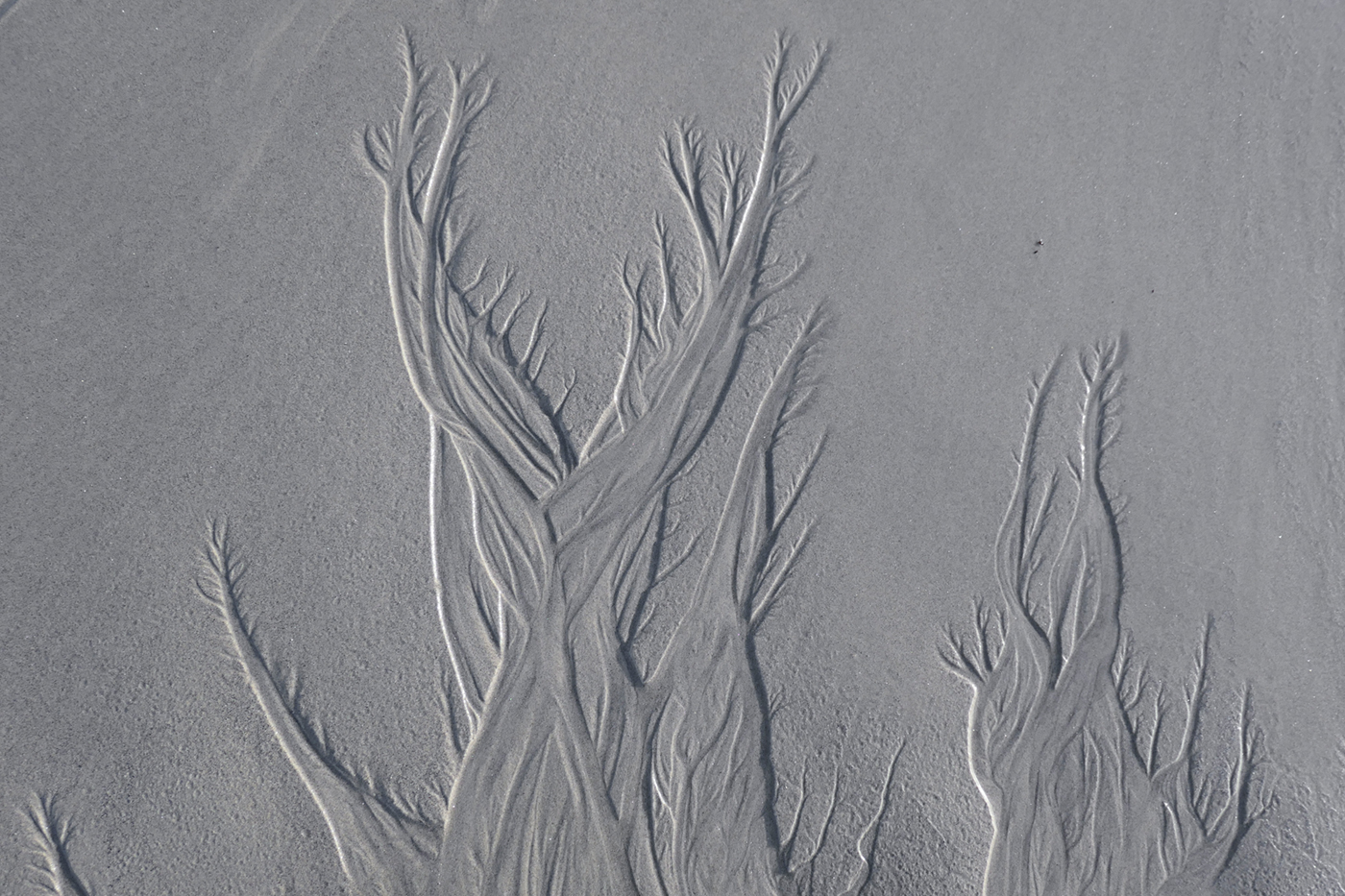
Klaudia Dietewich „Fleeting Landscapes, Plage des Blancs Sablons,
Le Conquet, Bretagne, FR, 2020 – 2023 (10)“
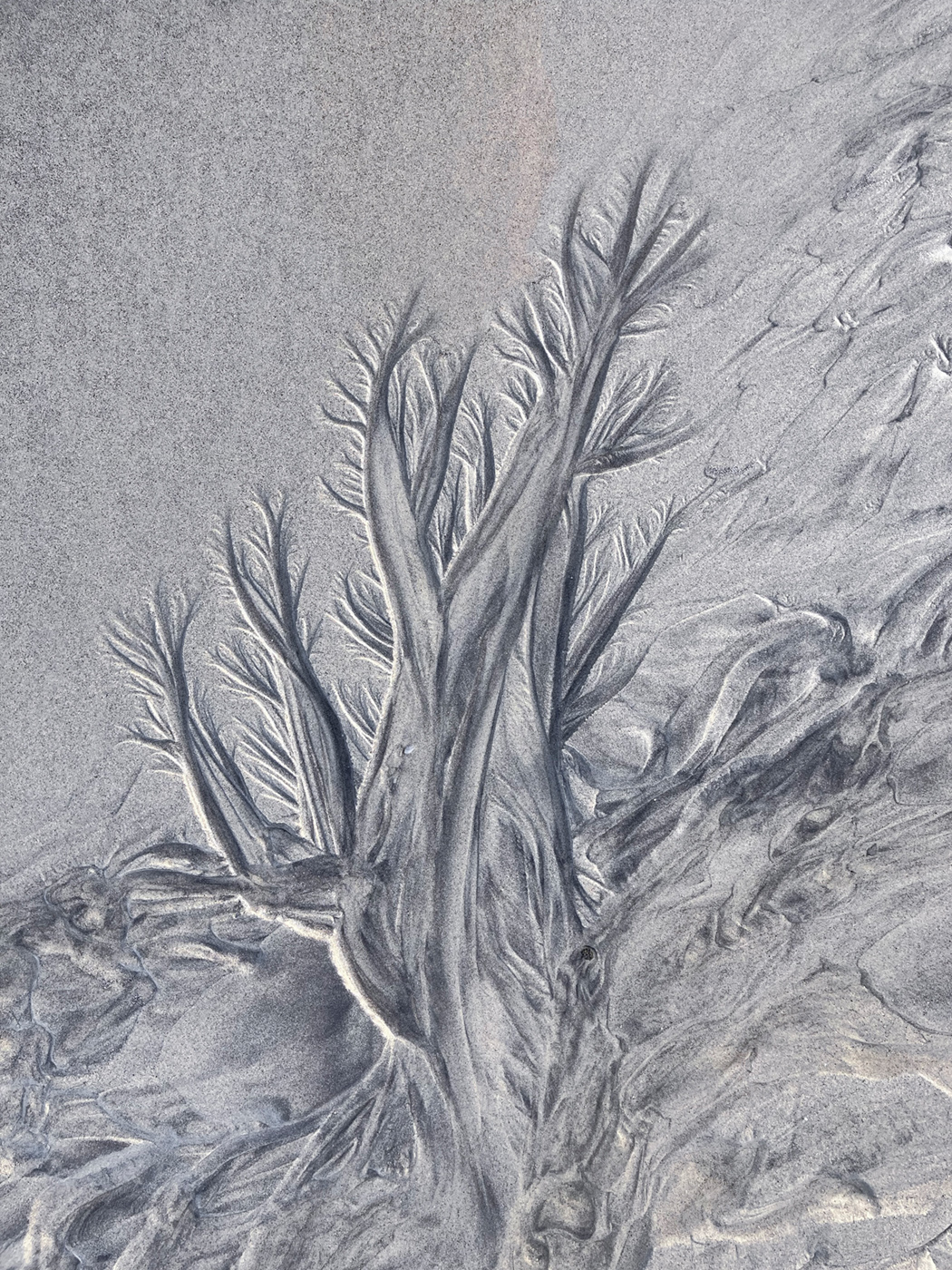
Klaudia Dietewich „Fleeting Landscapes, Plage des Blancs Sablons,
Le Conquet, Bretagne, FR, 2020 – 2023 (11)“
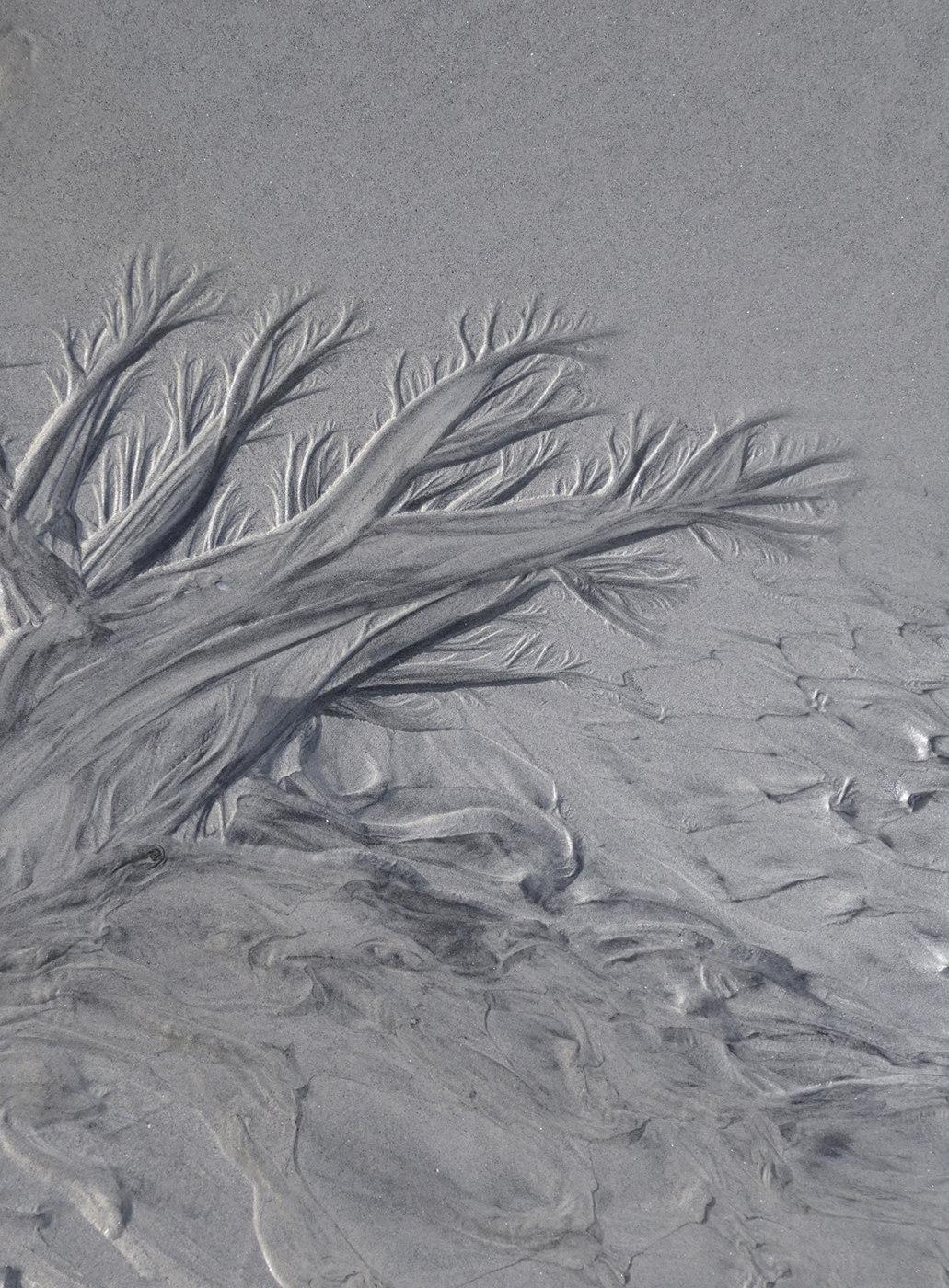
Klaudia Dietewich „Fleeting Landscapes, Plage des Blancs Sablons,
Le Conquet, Bretagne, FR, 2020 – 2023 (12)“
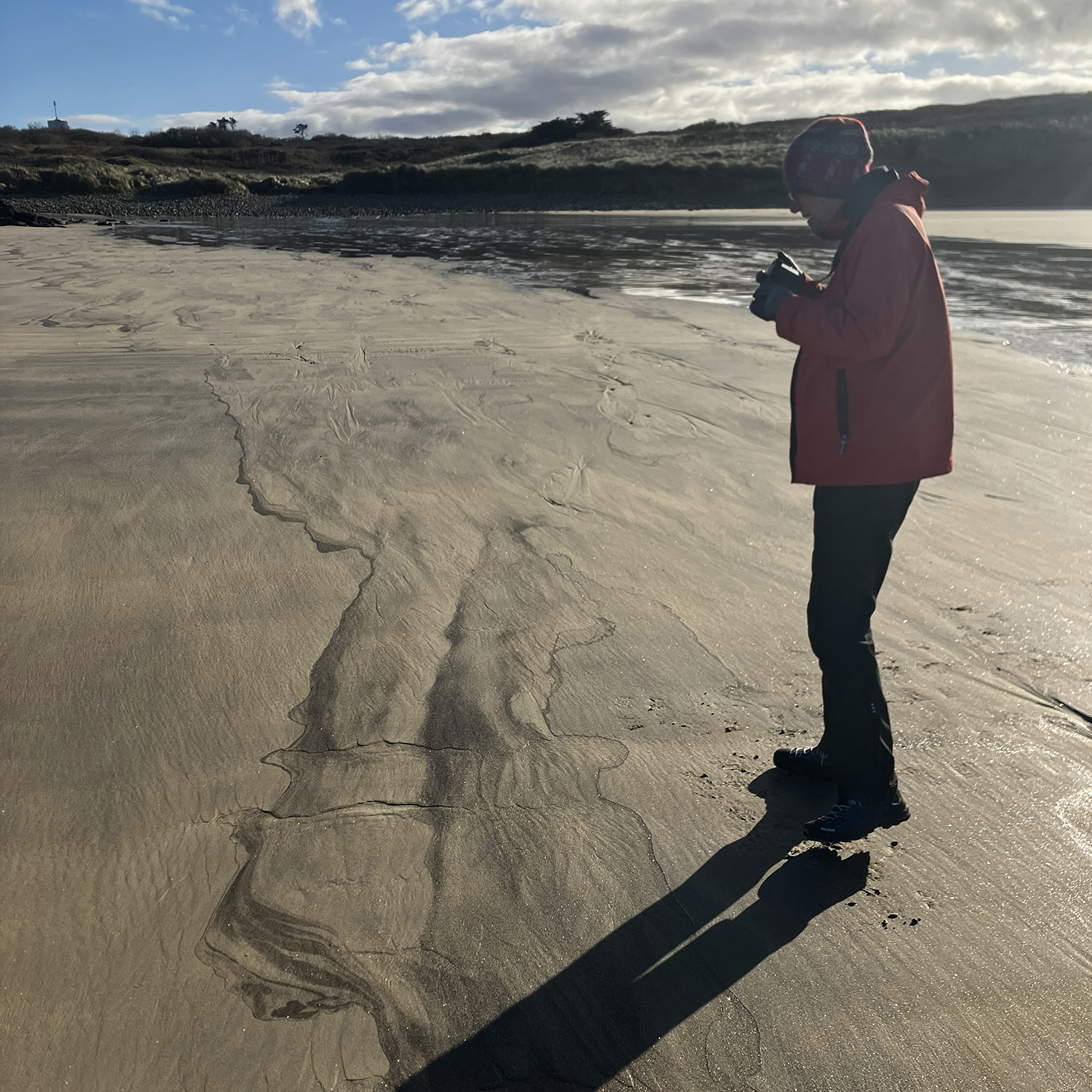
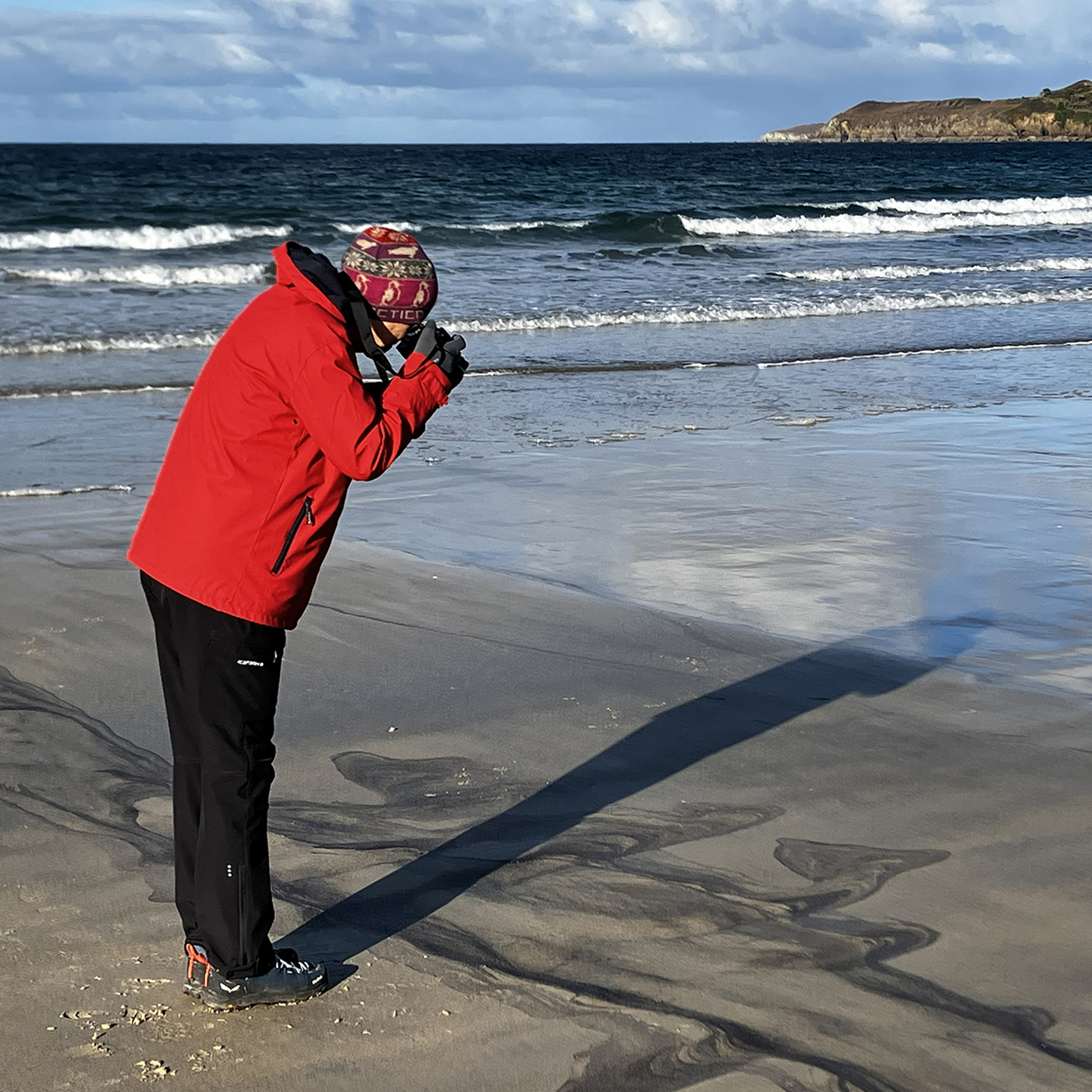
making of …
Klicken Sie mit der rechten Maustaste auf das Video und aktivieren den Sound
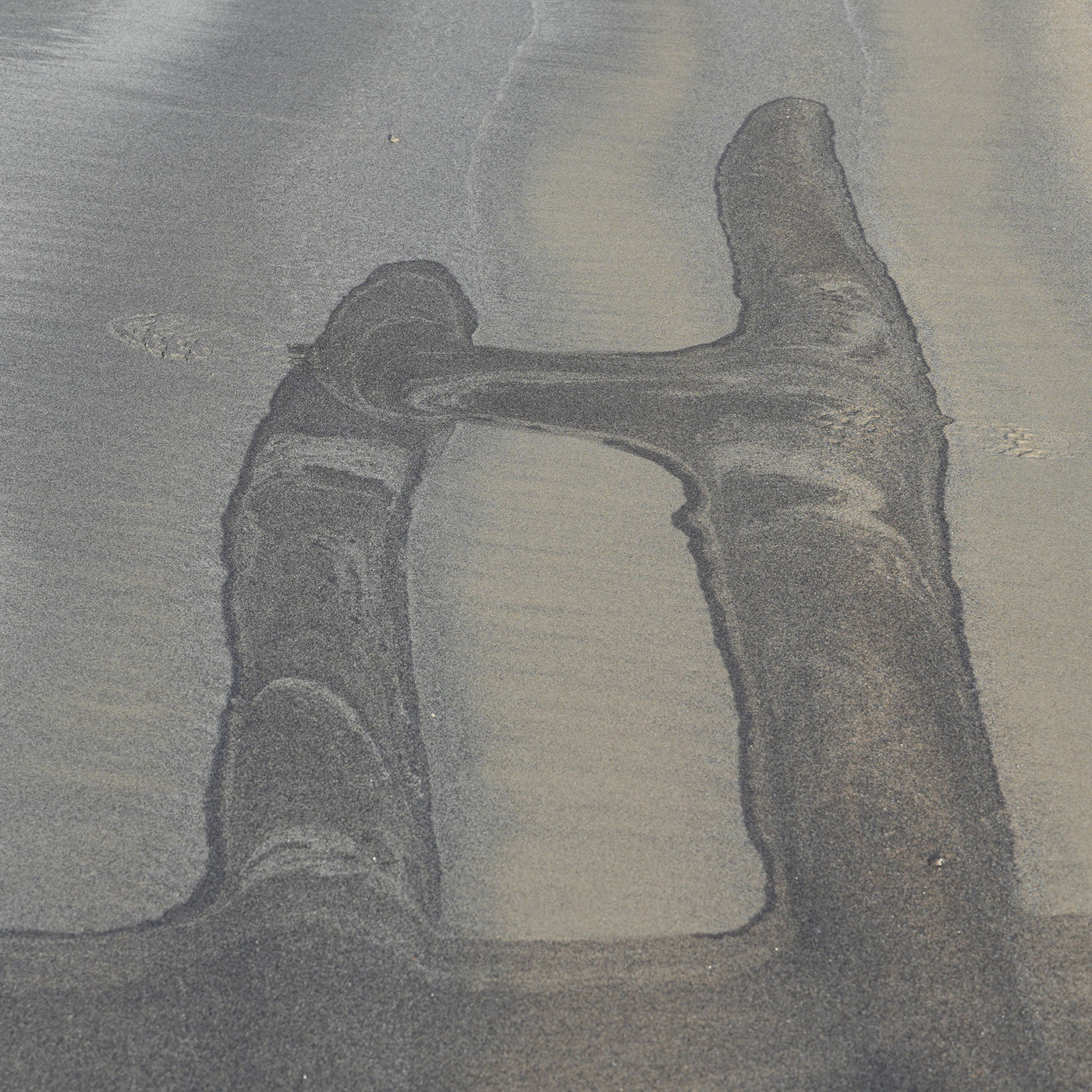
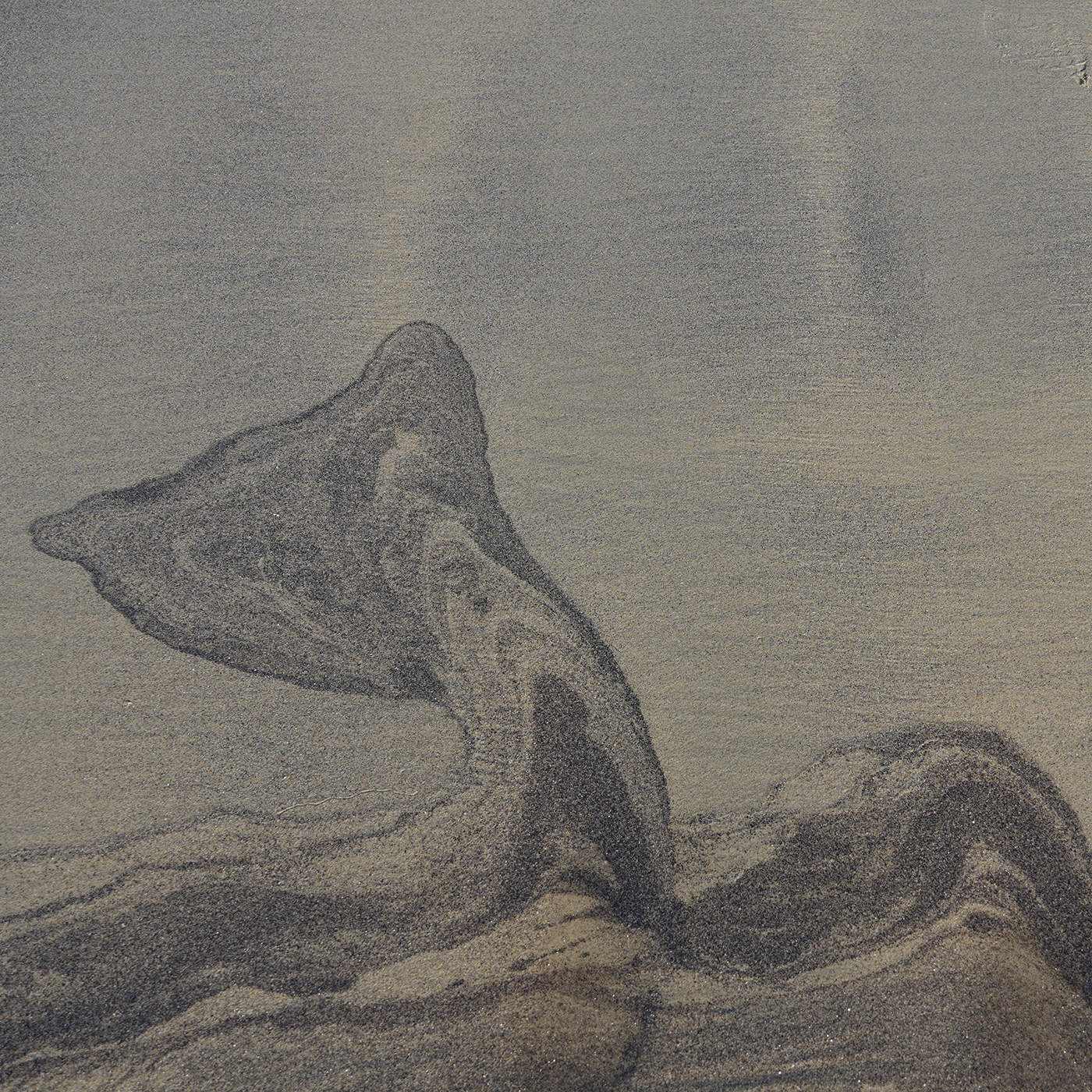
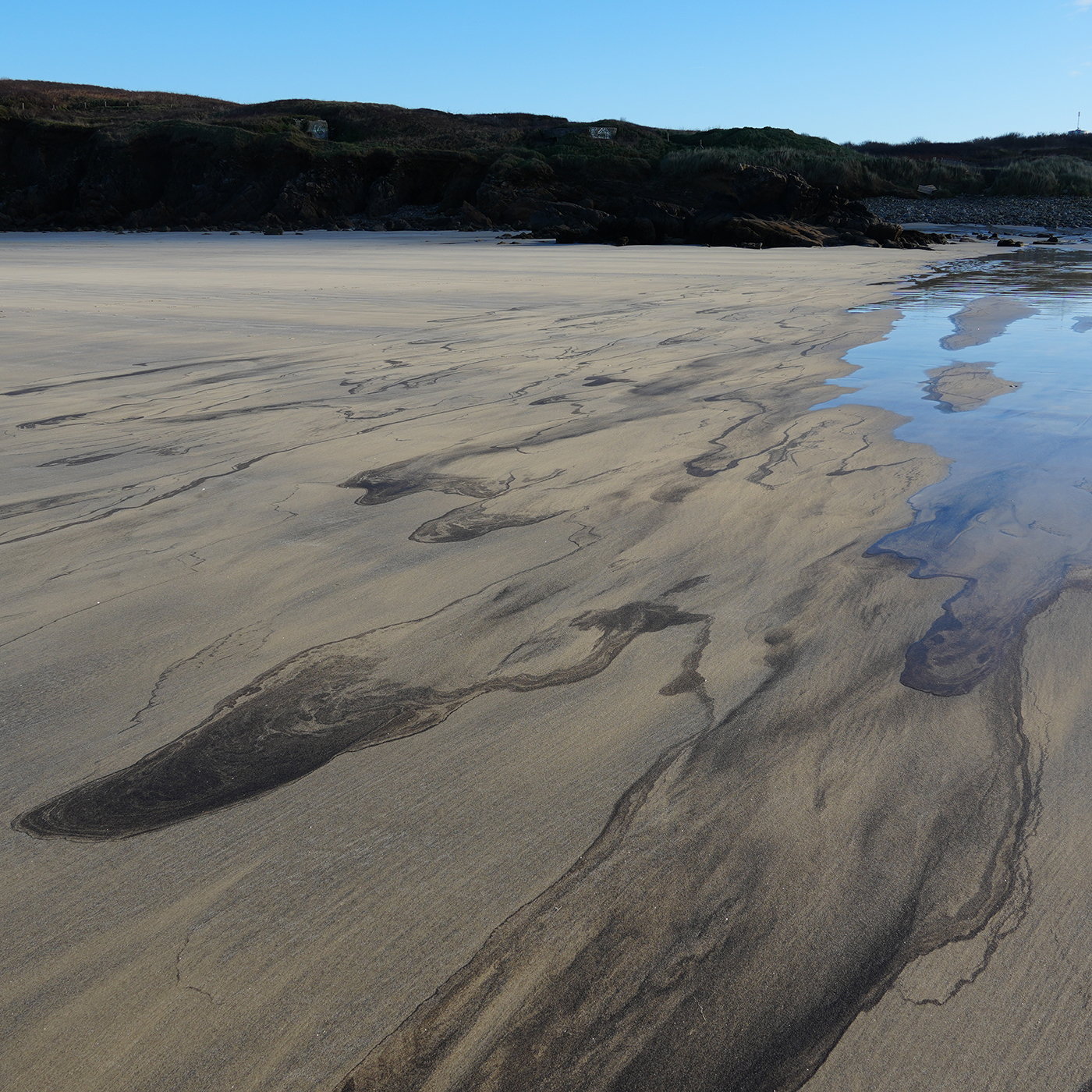
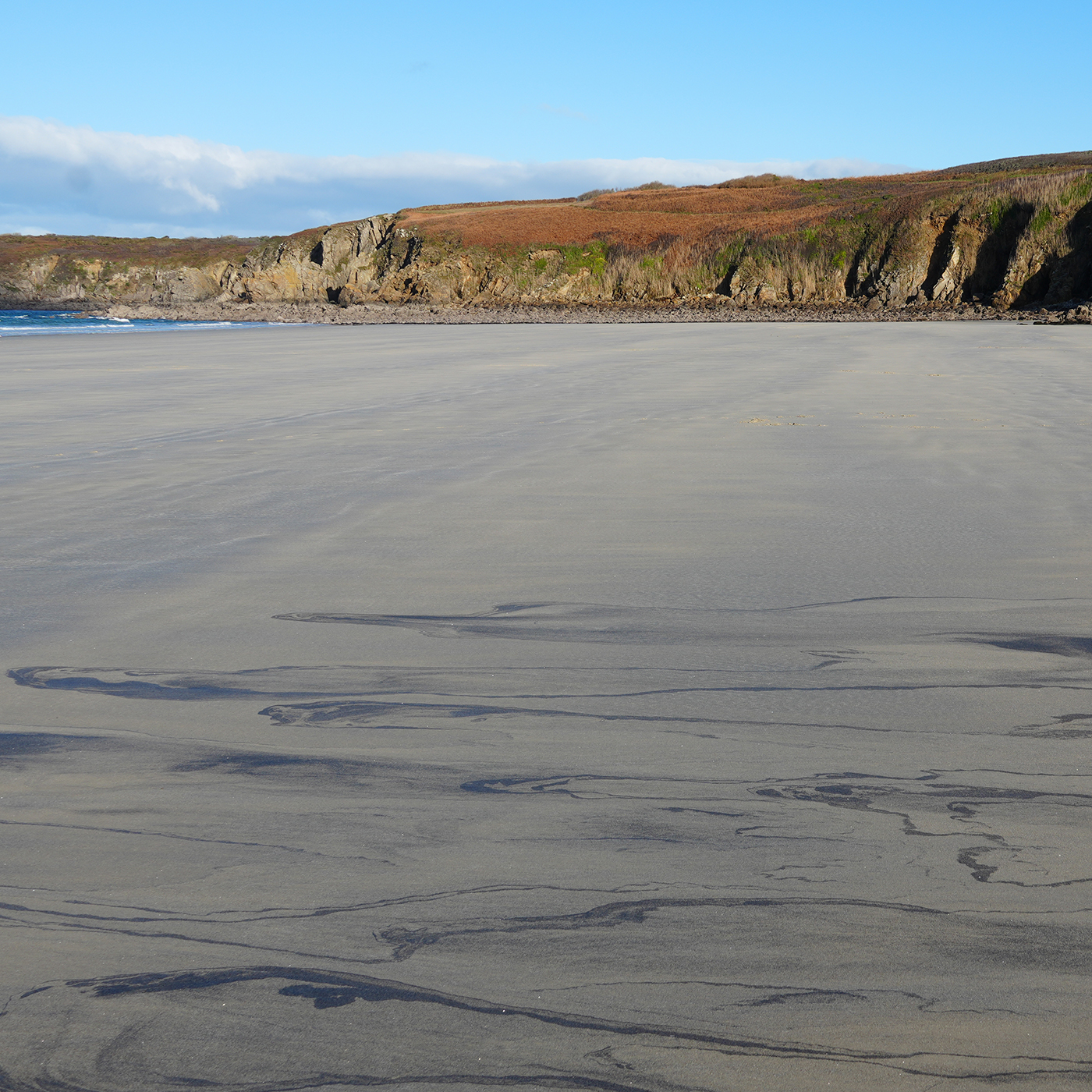
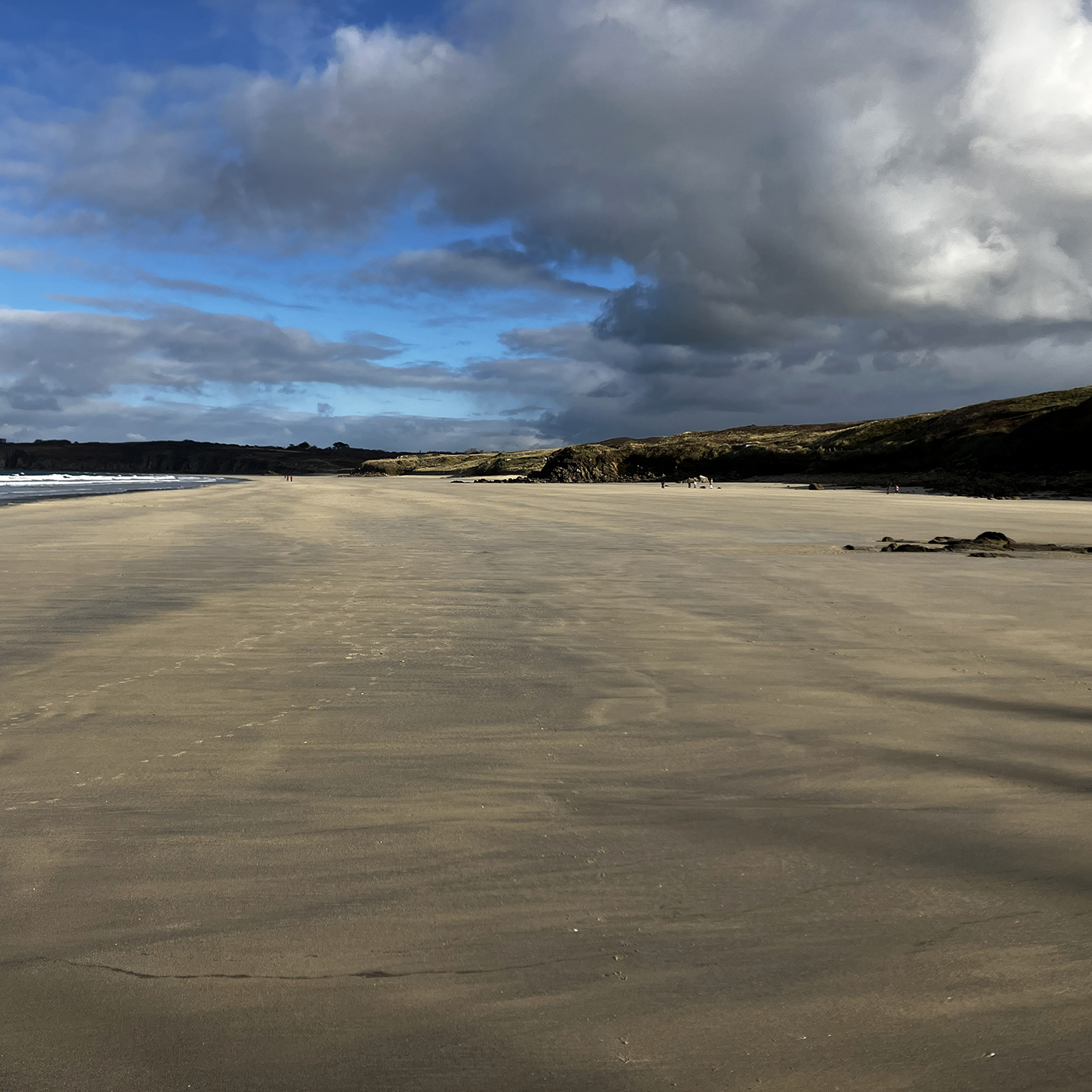
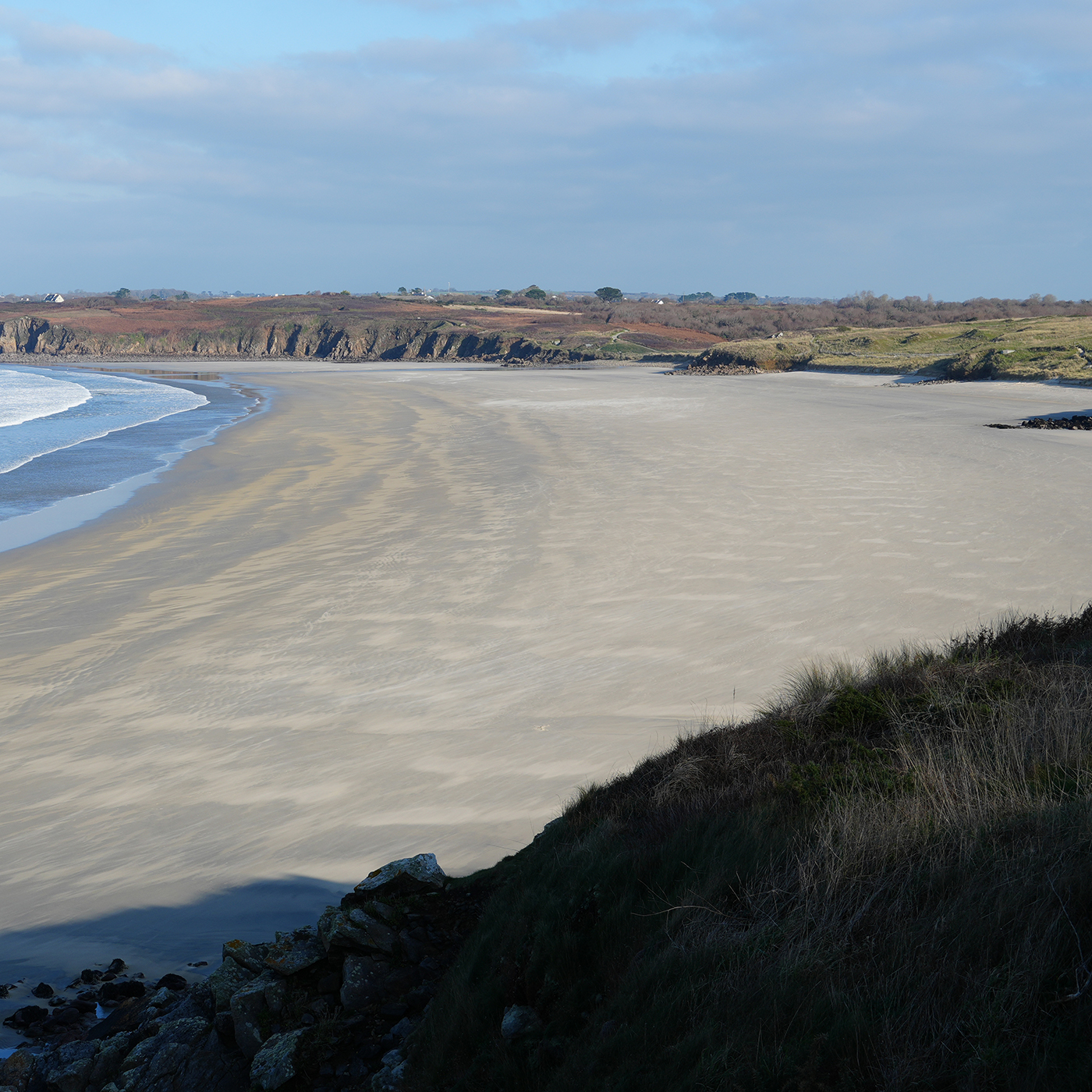
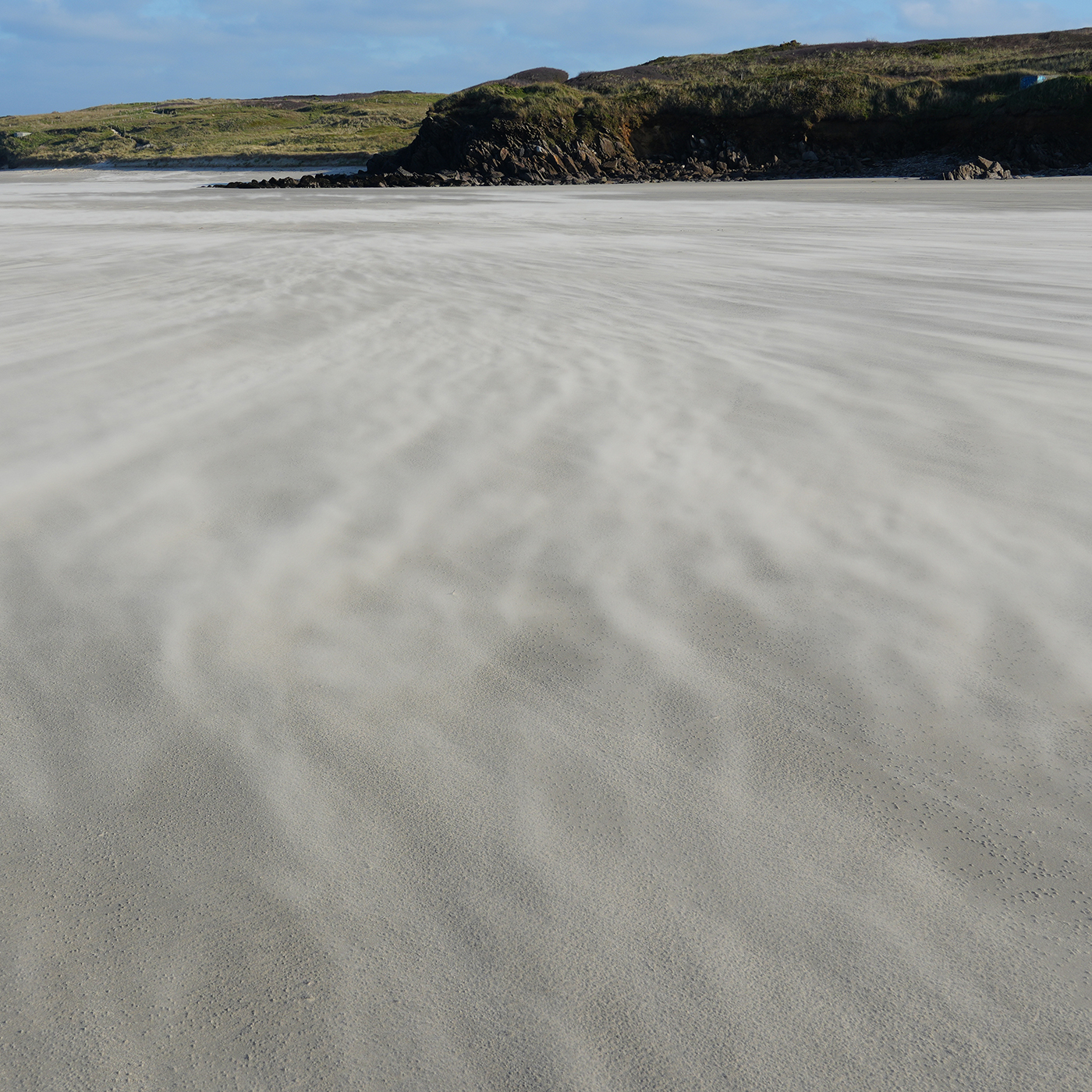
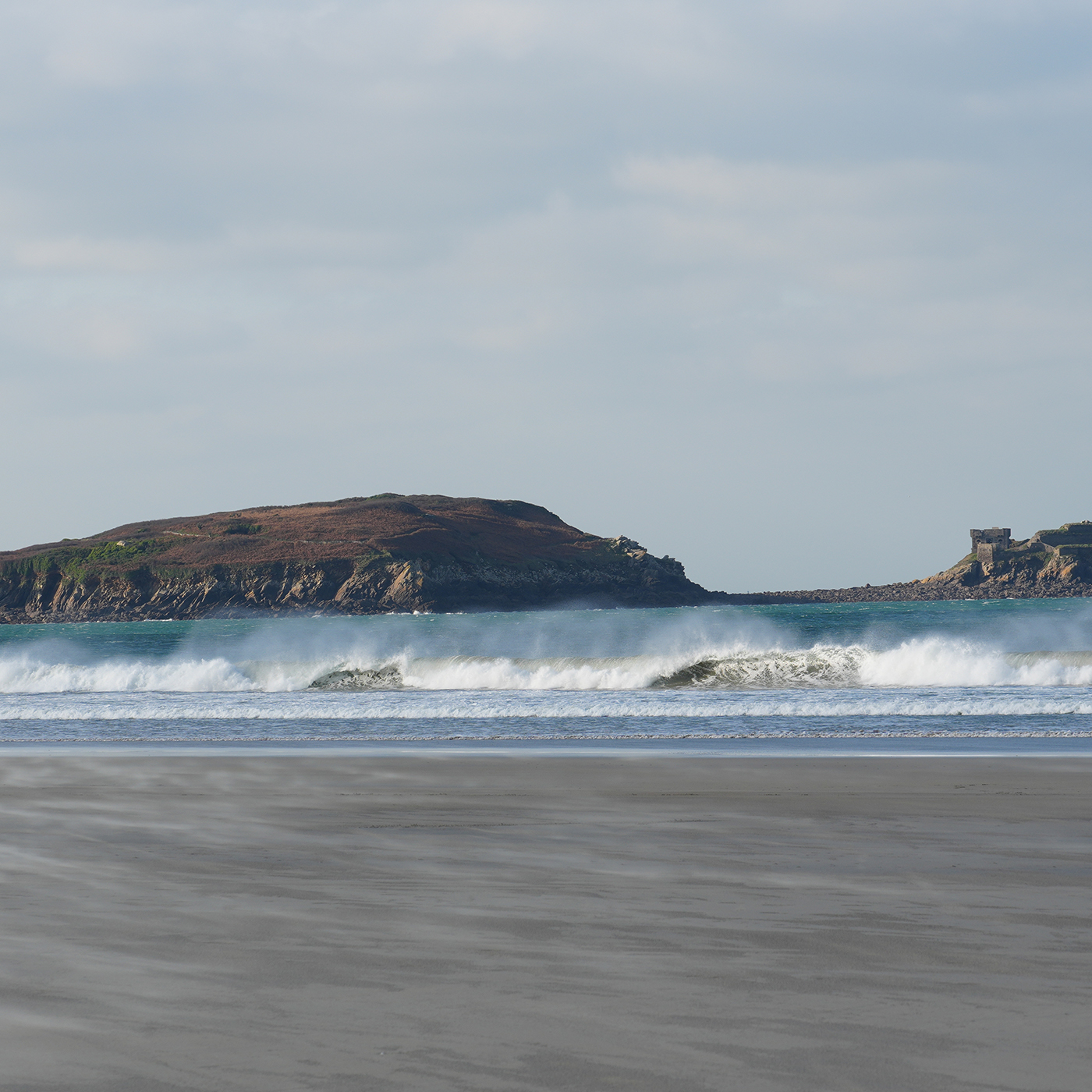
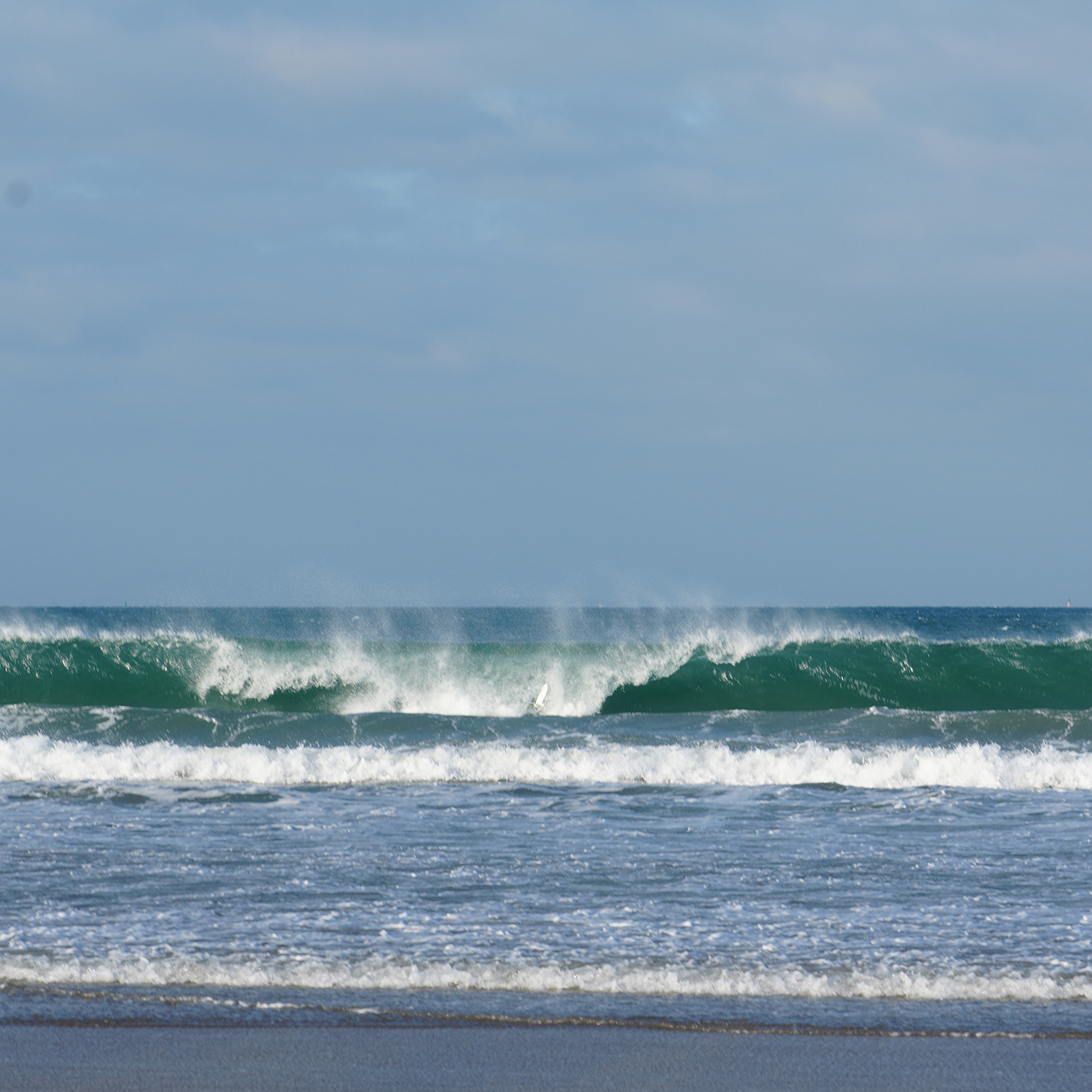
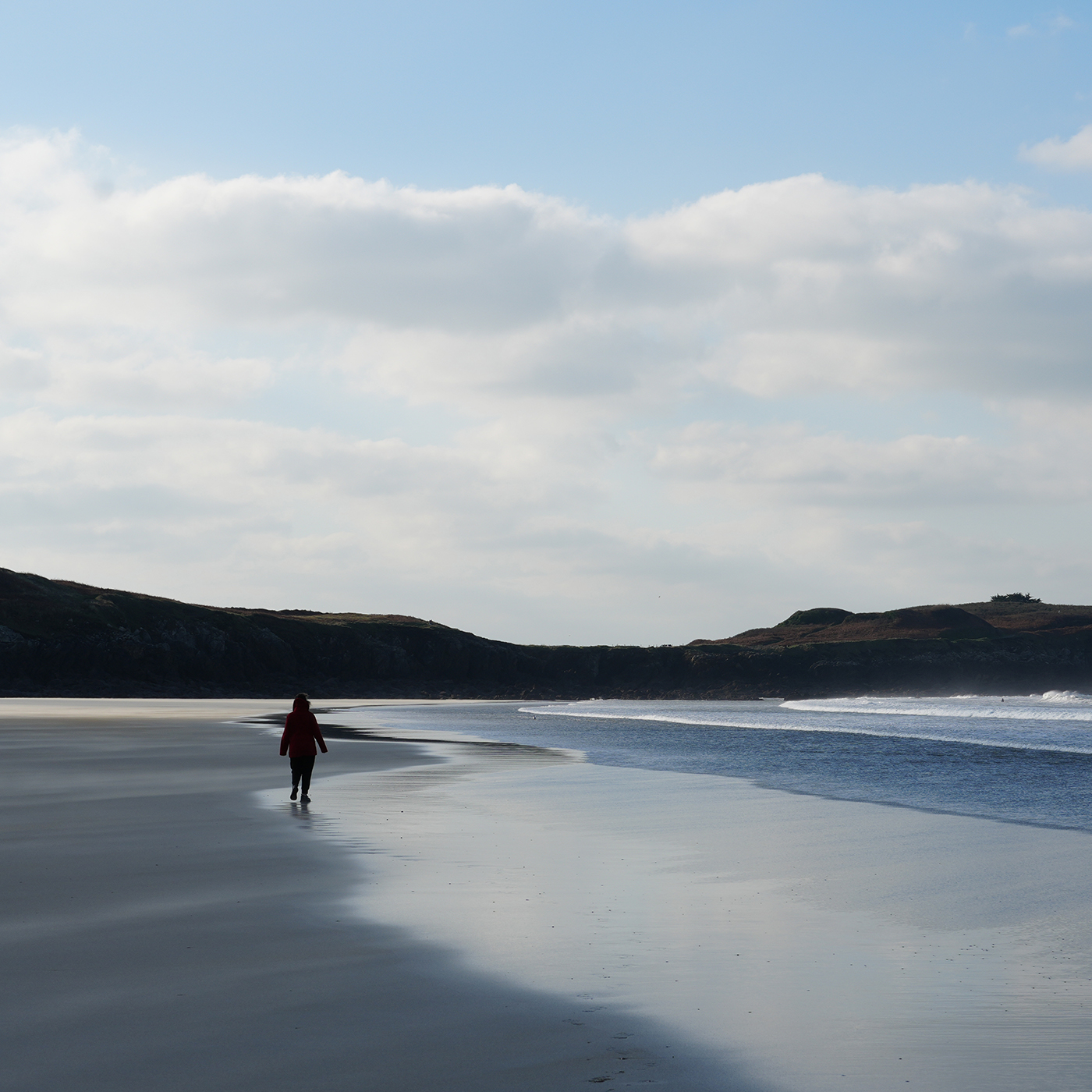
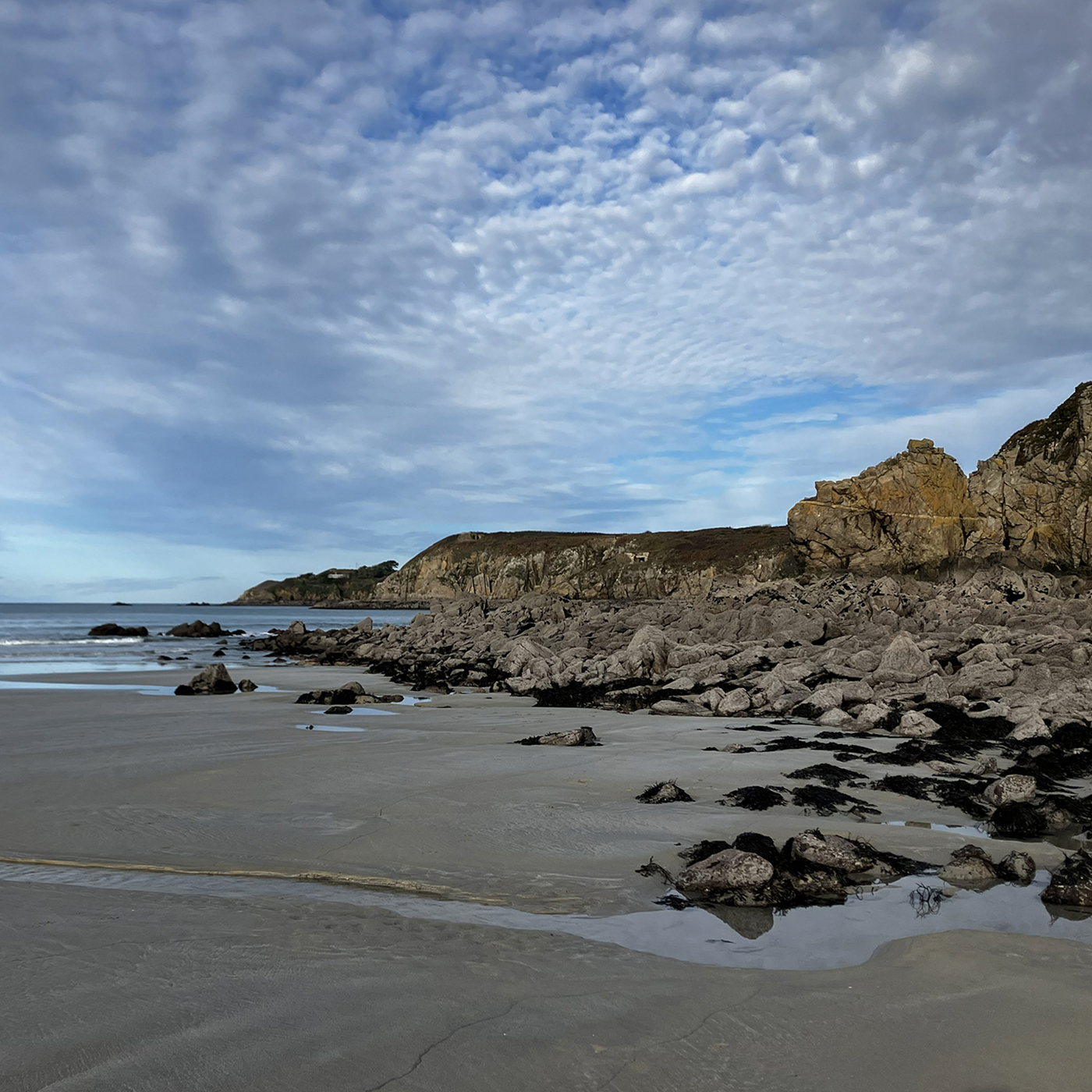
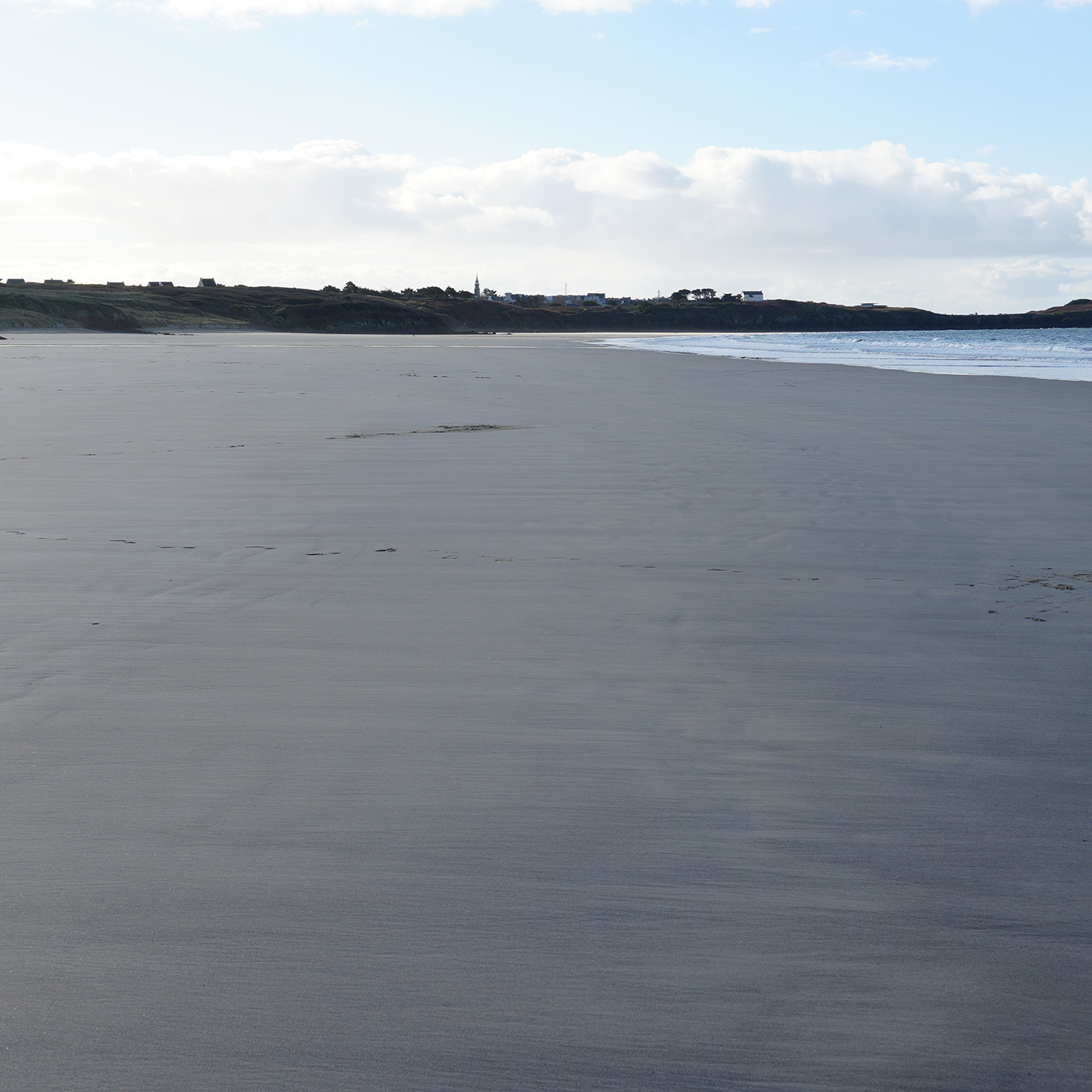
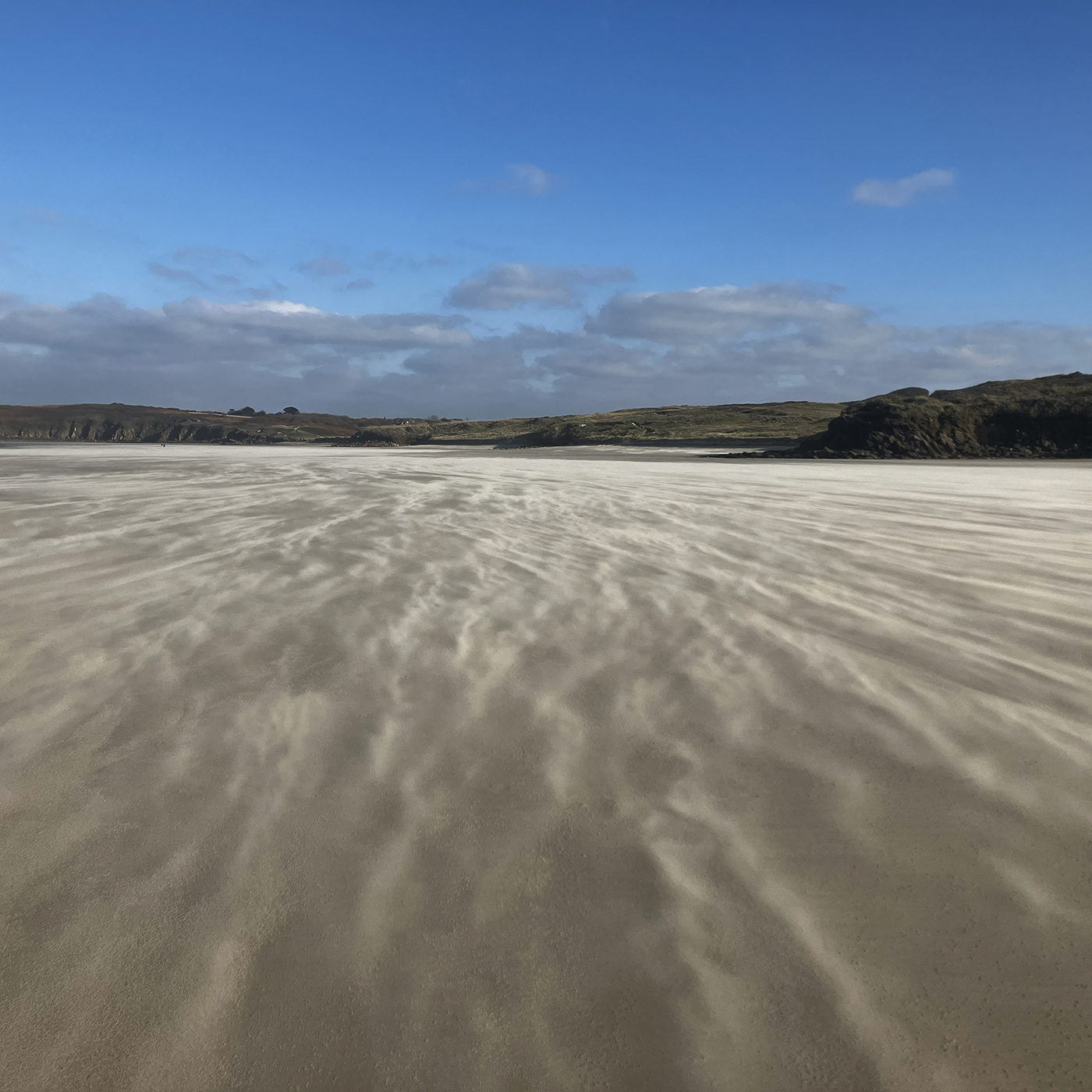
The beach “Les Blancs Sablons”, “Gwendraezh” in Breton, is located near the small town of Le Conquet in Finistère in Brittany and is extremely popular with surfers of all kinds due to the strong winds and the accompanying swell. The entire area lies on a wedge-shaped rock formation of granite, which not only extends far inland, but also up to 7000 meters deep: former mountains, almost as high as the Himalayas, which were not eroded, but gradually disappeared into the depths of the soft layers of earth.
This granite essentially has three components: Feldspar, white grains that make up the majority of the sand there, light gray quartz and black mica from the group of phyllosilicates, also known as mica. The special characteristic of mica is that it is built up in layers that are very weakly bonded to each other and therefore easily separate at the boundaries of the layers. This black mica in the sand has the shape of sequins that surf in the waves like leaves in the wind. For this reason, the black mica moves faster in the receding waves than the light-colored feldspars and quartz, which offer more resistance to the water and sink to the bottom more quickly.
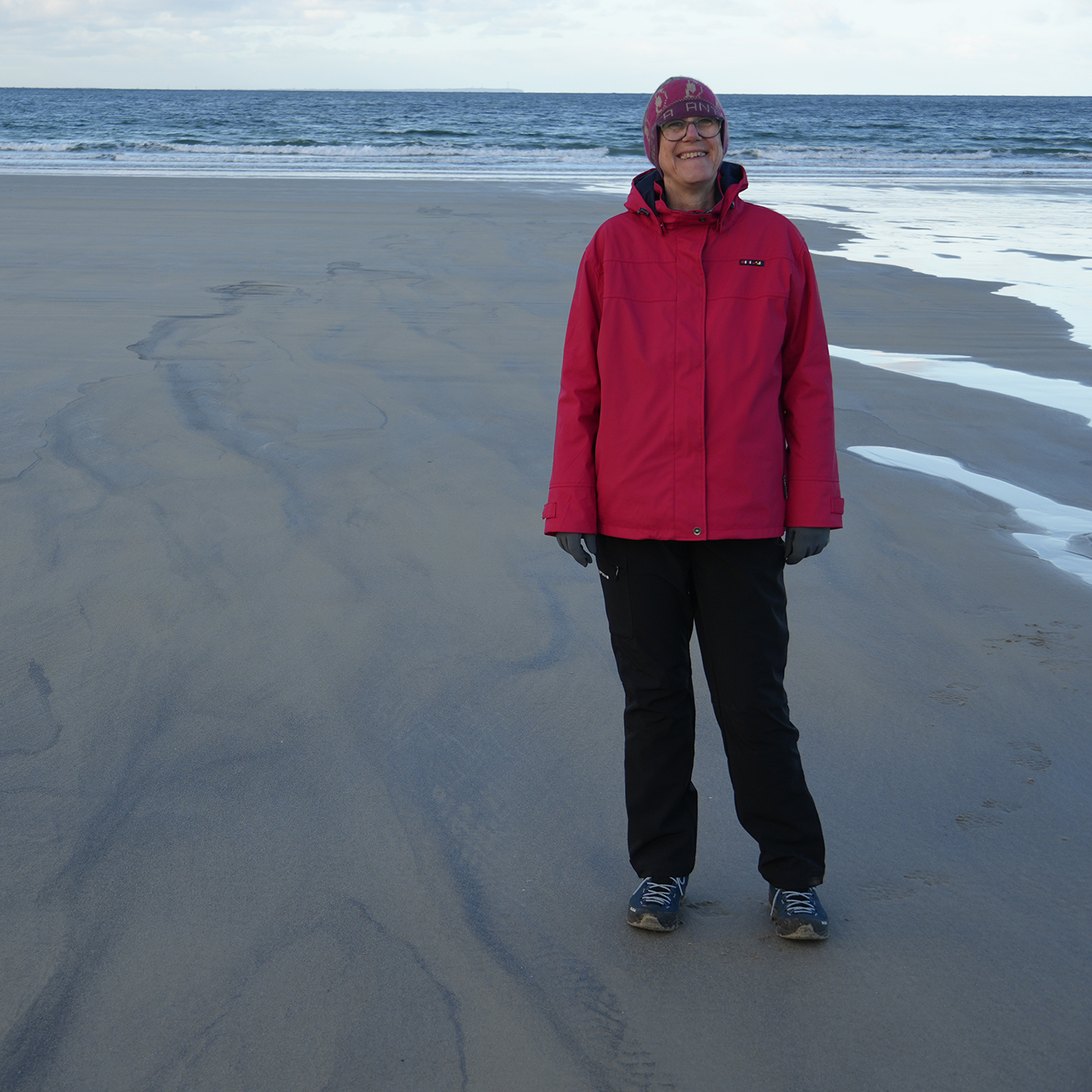
My photos in this book show the traces of these rocks that once reached for the sky and are at the same time rapidly fading snapshots, images drawn by the waves that may have disappeared again moments later.